It’s kinda wild when you think about it. Not that long ago, the idea of a computer being able to actually see—to look at an image or a video and understand what’s going on—felt like something out of a movie. But here we are. Machines can recognize faces, spot defects in products, read handwritten notes, even tell when a plant is sick just from a picture. And what’s really interesting is how this technology, called computer vision, is no longer just a research thing. It’s everywhere now, quietly changing the way modern businesses run day to day.
Computer vision, in simple terms, lets machines process and understand visual data, kinda like human sight but at a crazy fast scale. It takes pictures or videos, breaks them down into patterns, colors, movements, and then figures out what it’s seeing. The part that’s really transforming industries is custom computer vision — systems that are built specifically for a company’s unique needs, not just some generic plug-and-play tool. Learn more about custom computer vision development.
Manufacturing: Quality Control and Prediction
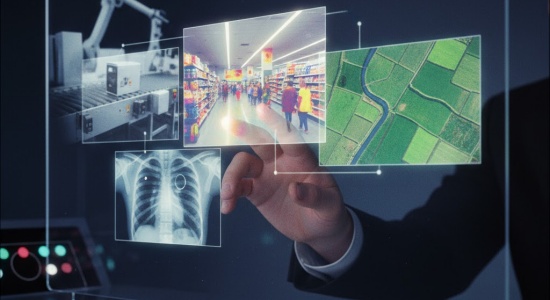
In manufacturing, for example, this stuff has been a total game changer. Before, quality control used to mean rows of workers staring at conveyor belts, looking for dents or scratches or misprints. It was tiring, slow, and honestly, pretty easy to miss mistakes after a few hours of repetition. Now, cameras powered by custom vision models scan products faster than any human could, and they catch even the tiniest defects. Some systems go a step further and predict when a problem might happen, by noticing subtle visual cues — like a small vibration pattern or color change — that could mean a machine part is wearing down. Over time, factories start preventing issues before they even happen. That’s not just efficiency; it’s a complete shift in how production is managed.
Retail: Shopper Behavior and Merchandising
In **retail**, computer vision works in a different way, more focused on people than products. Stores use it to analyze how shoppers move around, where they stop, what shelves they look at, and how long they stay in each area. It might sound a bit Big Brother at first, but the goal isn’t spying — it’s learning what people actually do, instead of guessing. For example, a shop could find out that customers look at a product a lot but rarely buy it, which might mean it’s priced wrong or in a bad spot. Or maybe certain displays attract tons of attention but don’t convert to sales. That kind of real-world insight helps retailers make better choices, way faster than old-school surveys ever could.
Computer vision models trained with thousands of medical images can spot early signs of things like cancer that even skilled doctors might miss.
Healthcare: Diagnostics and Compliance
Healthcare is another field where computer vision feels almost magical. Doctors are using it to detect diseases from images like X-rays or MRIs. Custom vision models trained with thousands of medical images can spot early signs of things like cancer that even skilled doctors might miss. They don’t replace doctors, though — they work with them, highlighting possible issues and saving time. Some hospitals even use vision systems to track hygiene compliance, making sure everyone’s following protocols or monitoring how patients move around. These might sound like small things, but they help hospitals run smoother and, in some cases, **save lives**.
Agriculture: Pest and Hydration Analysis
Agriculture has jumped in too, and that’s one people don’t expect. Drones fly over huge fields taking pictures, and AI models analyze those images to check for pest problems, hydration levels, or nutrient deficiencies. Instead of treating an entire field the same way, farmers can now target specific areas that actually need attention. It’s more efficient, cheaper, and better for the planet. Some systems even predict future crop yields by comparing current images with data from past seasons. Farmers get to make smarter decisions, and less of their work depends on guesswork or luck.
Logistics and City Management
Then there’s **logistics** — trucks, warehouses, and shipping centers. Vision systems here help track boxes, detect damages, and make sure everything’s loaded safely. A company can know instantly if a package fell off the line or got crushed during transport. Cities are starting to use similar systems to manage traffic, detect accidents, and improve public transport timing. Each one of these small tasks, when automated, saves hours and money.
The Custom Advantage
One big reason businesses prefer custom vision systems over general ones is because every place looks different. Lighting, camera angles, materials — all that affects how a model performs. A solution built for a clean tech lab won’t work the same in a dusty warehouse or a supermarket. So, companies train their own models with data from their real environments.