
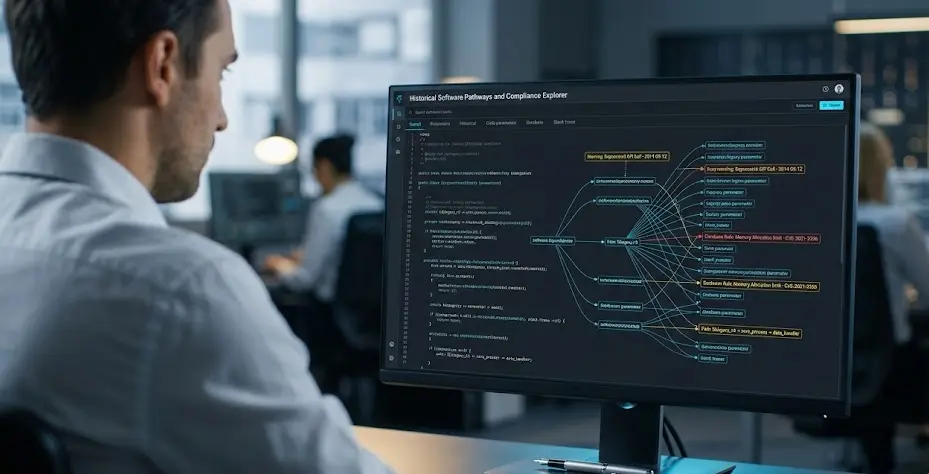
 The decision to overhaul an aging corporate platform often stems from an engineering desire for clean code repositories rather than an objective analysis of user needs.When software starts to show its age, development teams frequently push for a total rewrite, viewing old codebases purely as technical debt that must be cleared out. What usually gets underestimated in these reset discussions is that old code functions as a living repository of the company’s operating history. Executing a comprehensive legacy code modernization by building a clean interface layer is far safer than erasing the foundation. Old logic tracks contain years of compromises, specialized integrations, and unique business exceptions that match real-world messy client habits. Tossing out the base system to start over deletes this implicit knowledge, forcing the firm to re-learn expensive operational lessons the hard way when critical workflows break post-launch.
Why old software code represents accumulated business knowledge
Established systems are rarely complicated simply because they were poorly written by long-gone teams. More often, they look complex because corporate reality itself is highly complicated, containing adjustments added over years to fulfill specific legal rules, compliance mandates, and accounting needs.
Every strange conditional block or custom validation rule in the codebase corresponds to a real-world business exception that keeps transactions moving safely. Erasing this code debt without an audit destroys the structural memory of the business. Product engineers realize that keeping this foundation running while updating the surface interface preserves decades of proven operational experience.
The unseen operational costs of rebuilding custom edge cases
When a company embarks on a full rewrite project, the development team intends to document every single feature of the old system before writing new code. In practice, this documentation goal breaks down because nobody fully remembers every exception built into the platform over a decade of use.
Features that look completely redundant during initial planning turn out to support high-value workflows for old corporate accounts. Consider the following risks of ignoring edge cases:
- Sudden billing discrepancies due to lost legacy pricing logic blocks.
- Broken data transfers with specialized third-party partner portals.
- User frustration when historical keyboard shortcuts vanish from the app.
Losing operational knowledge during a system reset triggers expensive post-launch emergency fixes that drain engineering capacity and strain client relationships.
Hiding complexity: The engineer’s secret weapon for user adoption
The most effective strategy for modernizing an enterprise software product is to hide systemic complexity rather than attempt to delete it from the codebase. Users are not searching for architectural elegance when they log into a platform; they need clarity, speed, and predictability in their daily workflows.
By building intuitive design interfaces over old backend services, engineers give users the feeling of a brand-new application. A clean visual interface protects focus by presenting choices only when they are needed for the task at hand. Carefully hiding internal system noise under an elegant interface layer preserves system power while maximizing user adoption.
When to allow selective backend refactoring over design updates
While surface design modernization projects provide the fastest financial returns, there are specific bottlenecks where backend architecture genuinely requires deep engineering interventions. If server performance degrades to the point where data queries trigger timeouts, or maintenance costs exceed the price of new hardware, selective refactoring becomes mandatory.
The key to success is to avoid a total rewrite, focusing engineering resources strictly on the services that restrict business scaling. This targeted approach isolates technical updates, ensuring that database fixes happen safely beneath the updated interface layer without disrupting the user’s daily schedule or triggering system-wide downtime.
Safeguarding legacy database integrity during user interface swaps
Deploying a decoupled interface layer over an old technical foundation requires strict data validation mechanisms to prevent entry corruptions. Engineering directors must build strict API testing protocols, ensuring that updated frontend fields format data perfectly according to legacy database rules before write actions occur.
Furthermore, validation scripts must run continuously to monitor automated data flows across all integrated corporate branches. Maintaining absolute data alignment protects corporate information assets during the interface transition phase. By treating legacy code as a stable transaction engine and the frontend as a dynamic tool, companies secure their software investments, reduce deployment risks, and protect operational budgets for long-term growth.