 Exploring the best food markets in Lima offers an unmatched sensory journey for culinary researchers and dedicated travelers who want to see the raw materials that drive Peru’s globally acclaimed gastronomy in this 2026. While the city’s high-end restaurants receive international accolades, their executive chefs procure their signature ingredients from these bustling, traditional commercial hubs scattered across the capital. Walking through the organized aisles allows you to observe the complex distribution networks that connect the high-altitude Andean farms and remote Amazonian rivers directly with coastal kitchens. These local centers are where the true, concentrated flavors of Lima are preserved, away from the standardized menus of mainstream tourist hotels. However, navigating these expansive markets requires a clear understanding of local commerce dynamics, stall classification systems, and basic food safety indicators. By learning how to shop and dine like a local resident, you can safely sample exceptionally fresh seafood dishes and discover rare botanical varieties that never make it to international supermarket shelves.
Where can travelers find the best food markets in Lima for sourcing?
Locating the premier hubs for authentic food sourcing involves moving past small neighborhood bodegas and identifying the massive commercial hubs where coastal families buy their daily provisions. The best food markets in Lima are distinguished by their size, direct connections with farming cooperatives, and strict freshness standards.
For an independent traveler, visiting these sites provides an unfiltered look at the sheer variety of ingredients that define South American cooking. These locations operate as the foundational pillars of the city’s food culture, showing that great menus always start at the source.
How do historical market layouts like Surquillo organize local commerce?
The physical layout of markets like Surquillo follows a system that clusters vendors by food groups to ensure efficiency and hygiene. Walking through the concrete corridors allows you to see how trade has been structured for decades.
The internal commercial space is divided into three sectors:
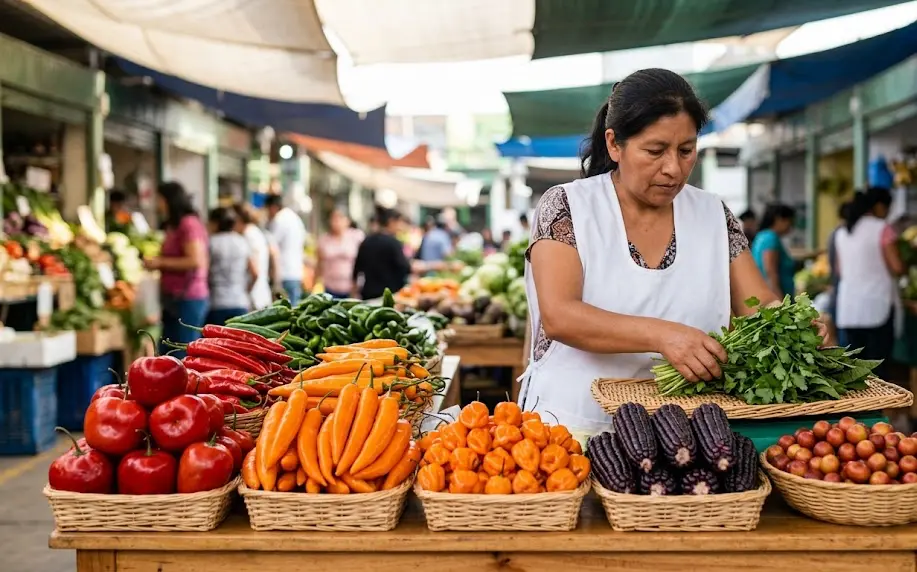
- The Produce Awnings: Stalls filled with dozens of varieties of native potatoes and yellow chilis.
- The Seafood Section: Wet marble counters displaying fresh rock bass and giant squid harvested hours prior.
- The Spice Rows: Narrow paths aromatic with fresh cilantro and Andean quinoa varieties.
What exotic Amazonian and Andean fruits await the curious international palate?
The microclimates of the Andean cordillera and the humid lowlands of the Amazon basin supply the coastal markets with an incredible variety of fruits that are completely unknown in the Northern Hemisphere. These rare botanical specimens provide complex sweet, acidic, and creamy flavor profiles.
The biodiversity of native mountain and jungle crops
Sampling fruits like cherimoya, lucuma, and camu camu reveals textures that range from custard-like pulp to intense, tart juices packed with natural antioxidants. What looks like a simple green pod to a foreign visitor is actually a sweet pacay fruit containing delicate cotton-like segments. Exploring these unique agricultural items expands your understanding of the continent’s massive biodiversity.
Why do market food stalls offer the most authentic seafood experiences?
The small eateries operating inside the market perimeters operate with an operational model that high-end restaurants cannot duplicate: zero inventory delay. Because the food stalls are located meters away from the primary fishmonger counters, their raw materials are replenished continuously throughout the morning.
A market ceviche prepared at ten in the morning utilizes fish that was unloading at the docks just hours prior, guaranteeing maximum muscle firmness. There is a raw, electric energy in dining on a plastic stool inside a loud market aisle that makes the meal feel far more connected to the city’s working-class roots. This direct sourcing model keeps prices low while keeping quality exceptionally high.