
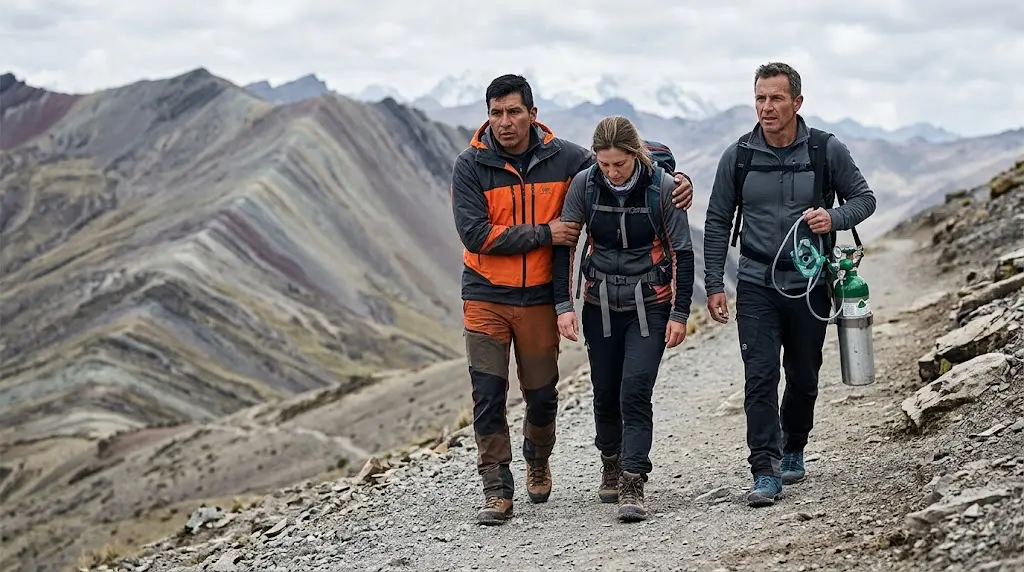
 Knowing when an altitude sickness medical emergency peru scenario is developing on the trail can save a life when hiking above 5,000 meters. While mild soroche symptoms like headaches and fatigue are common at extreme elevations, high altitude can occasionally trigger life-threatening medical conditions. High Altitude Pulmonary Edema (HAPE) and High Altitude Cerebral Edema (HACE) are severe, rapidly progressing complications that occur when fluid builds up in the lungs or brain. These conditions demand immediate recognition, emergency oxygen administration, and rapid descent to lower elevations. Hikers embarking on a Rainbow Mountain hike must understand these critical red flags before stepping onto the trail. Identifying signs like extreme breathlessness while resting, confusion, or inability to walk in a straight line ensures you or your companions take immediate action. Prioritizing safety over reaching a summit guarantees that every mountain adventure ends securely.
¿When is altitude sickness medical emergency peru protocol needed?
Activating an altitude sickness medical emergency peru response becomes necessary the moment a hiker displays neurological impairment or severe respiratory distress. At 5,000 meters, waiting to see if severe symptoms improve at the same elevation is a dangerous mistake.
Immediate intervention prevents rapid physiological decline when advanced high-altitude illnesses set in.
Severe altitude complications like HAPE and HACE can become life-threatening within 6 to 12 hours if untreated.
Recognizing severe mountain sickness early allows guides to initiate rapid descent before mobility is lost.
¿What warning signs indicate Pulmonary Edema (HAPE) on trail?
High Altitude Pulmonary Edema (HAPE) occurs when fluid accumulates in the lung alveoli, severely impairing oxygen exchange. It is the leading cause of death from high-altitude sickness and requires immediate emergency action.
Critical red flag symptoms of HAPE on the trail:
- Extreme breathlessness at rest: Inability to catch one’s breath even while sitting down completely still.
- Gurgling or rattling chest sounds: Audible wet congestion when inhaling or exhaling.
- Persistent wet cough: Producing pink, frothy sputum accompanied by blue or gray lips (*cyanosis*).
Administering continuous oxygen while moving the patient downward is the immediate field treatment for suspected HAPE.
¿How do you recognize Cerebral Edema (HACE) in a fellow hiker?
High Altitude Cerebral Edema (HACE) involves fluid swelling in brain tissue, causing severe neurological dysfunction. It often manifests as extreme lethargy, irrational behavior, or loss of motor coordination.
The heel-to-toe gait test (*Ataxia Test*)
Ask a struggling hiker to walk in a straight line placing heel to toe. Inability to balance confirms severe neurological impairment requiring an immediate emergency descent.
Ataxia—loss of physical coordination—is the single most reliable indicator of progressing High Altitude Cerebral Edema.
¿Why is immediate descent the primary medical treatment?
While supplemental oxygen and medications like dexamethasone provide temporary relief, dropping elevation is the only definitive cure for severe high-altitude medical emergencies. Descending even 300 to 500 vertical meters dramatically increases atmospheric pressure and blood oxygen saturation.
A modest drop in elevation often produces rapid improvement in respiratory and mental status.
Descending 500 meters increases effective oxygen availability by roughly 10%, stabilizing emergency patients quickly.
Never hesitate to lose elevation when severe altitude symptoms appear on the trail.
¿How to prepare for an altitude sickness medical emergency peru?
Preparing for an altitude sickness medical emergency peru situation involves choosing accredited tour operators who carry certified emergency medical equipment. Confirming your guide team carries portable oxygen tanks and satellite communication gear provides a vital safety net.
Essential emergency preparation steps:
- Verify your tour operator carries medical-grade oxygen cylinders and pulse oximeters on every high-altitude trek.
- Ensure your travel insurance explicitly covers high-altitude emergency medical evacuations above 5,000 meters.
- Agree on a clear safety protocol with your hiking group: any member displaying severe red flags descends immediately with a guide.
Rigorous emergency preparation ensures peace of mind on extreme trails. Respecting mountain hazards keeps high-altitude exploration safe and rewarding.