¿What are the core humantay lake daypack essentials?
Assembling the right humantay lake daypack essentials requires balancing weight restrictions with high-altitude safety requirements. The trail from Soraypampa climbs over 350 vertical meters in under two miles, making every extra pound felt in your legs and lungs.
Your pack should contain functional gear tailored specifically to cold mornings, intense afternoon sun, and steep gravel terrain.
Carrying a pack under 5 kilograms (11 pounds) reduces spinal pressure and lowers oxygen consumption during high-altitude ascents.
Prioritizing technical gear over unnecessary electronics makes the difference between an exhausting ordeal and a exhilarating hike.
¿How should you layer clothing for extreme altitude weather changes?
Temperatures at the Soraypampa trailhead often hover near freezing at 5:00 AM, but rapid solar heating can push temperatures above 18°C (64°F) by mid-morning. Managing your body heat through a three-layer system prevents excessive sweating, which leads to chilling when you pause at the summit.
Essential clothing layers for high-altitude trekking:
- Moisture-wicking base layer: Synthetic or merino wool shirt that pulls sweat away from skin.
- Insulating mid-layer: Lightweight grid fleece or packable down jacket for cold summit winds.
- Waterproof outer shell: Breathable windbreaker or rain jacket to seal out sudden Andean showers.
Stowing these layers in accessible daypack compartments allows quick adjustments without stopping the group.
¿Why is high-altitude hydration critical during the steep ascent?
Dry mountain air and accelerated respiration cause rapid fluid loss at elevations exceeding 4,000 meters. Dehydration exacerbates symptoms of Acute Mountain Sickness (AMS), including throbbing headaches, nausea, and premature muscular fatigue.
Electrolytes and water capacity strategies
Pack at least 2 liters of water in a reusable hydration bladder or insulated flask, supplemented with electrolyte tablets to maintain sodium balance.
Drinking 500ml of water per hour of climbing significantly mitigates altitude sickness symptoms during steep mountain ascents.
¿What sun and wind protection items must go into your pack?
Atmospheric radiation increases by approximately 10 to 12 percent for every 1,000 meters of elevation gain. The reflection of sunlight off glacial lakes and bare rock intensifies UV exposure, making skin and eye protection non-negotiable along the trail.
Pack a broad-spectrum SPF 50+ sunscreen, UV-blocking sunglasses, lip balm with zinc protection, and a wide-brimmed hat or neck gaiter.
High-altitude UV exposure can cause severe sunburns in under 20 minutes without proper physical solar barriers.
Protecting your skin from fierce mountain winds keeps you comfortable throughout the four-hour round trip.
¿How do you pack humantay lake daypack essentials efficiently?
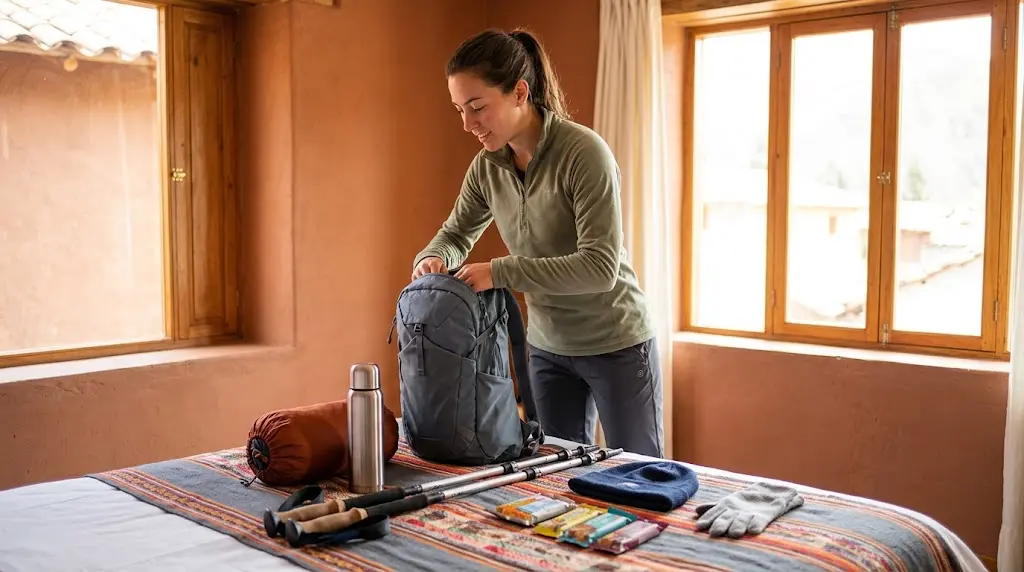
Organizing your humantay lake daypack essentials strategically keeps your center of gravity stable on uneven trail sections. Place heavy hydration reservoirs close to your spine in the main compartment, while stowing lightweight layers at the bottom.
Key organization steps for trail comfort:
- Secure heavy water containers vertically against your back panel to prevent load shifting.
- Store high-energy snacks, camera gear, and sunblock in top zippered pockets for instant access.
- Attach collapsible trekking poles to outer side loops when navigating flat valley sections.
Streamlining your pack layout eliminates trail distractions. A well-organized daypack guarantees maximum energy to enjoy the breathtaking glacial scenery.