
Sometimes it feels like technology moves so fast that we only notice the changes when they’re already part of everyday life. A good example is how machine learning and AI have slipped into the financial world almost without announcement, changing how banks detect fraud, how they decide who gets credit, and even how they talk to us as customers. These shifts didn’t come with fireworks or big headlines; they happened little by little, until suddenly nothing works the same as before. And in many ways, that’s the whole point: the best technology is often the one you don’t feel breathing behind your neck while it quietly makes things safer, faster, and a bit more personal. For insights on this transformation, read about IT services transforming banking models.
Fraud Detection: The Adaptive Financial Fingerprint
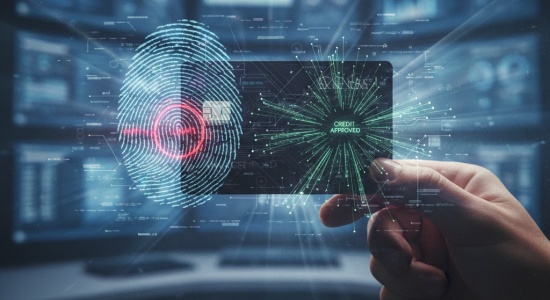
Fraud detection is maybe the most dramatic area where AI made an impact, even if most people don’t see it directly. Years ago, fraud systems were based on fixed rules, like if someone bought something for more than a certain amount or used a card in another country. It worked, kind of, but fraudsters changed tactics constantly, and these systems couldn’t keep up. Machine learning changed the game because it doesn’t need to be told every rule. It learns from millions of past patterns, comparing behaviors, spotting weird anomalies, and flagging them instantly. So now, if your card is used in a strange way, the system doesn’t only look at the amount or location; it looks at your usual habits, the timing, the merchant type, even the velocity of transactions. It’s almost like it builds a fingerprint of your financial behavior and immediately notices if something doesn’t match.
This doesn’t eliminate all fraud, of course, nothing does, but it reduces false alarms and catches attacks faster. Sometimes it happens in milliseconds, before the transaction is even approved. And maybe the most interesting thing is that the machine keeps learning. If a new fraud trend appears in Asia today, a system in South America could adjust itself tomorrow. Not because someone wrote new code, but because the model saw the new pattern and re-shaped its understanding of risk. The speed of this adaptation is something old systems simply could not do.
Credit Assessment: Finding Nuance Beyond the Salary
Another area transformed is credit assessment, which used to rely heavily on a few traditional numbers: salary, employment years, past loans, and whether someone paid on time. Those metrics still matter, but AI allowed lenders to consider a much broader picture. Instead of a narrow checklist, modern models analyze hundreds of signals, some direct and some more subtle. Spending patterns, savings habits, behavior on digital platforms, or the stability of income streams can all be taken into account. It’s not about spying or invading privacy; it’s about finding signals that actually predict risk better than rigid formulas from decades ago.
Because of this, people who might have been rejected by classic credit scoring sometimes get approved today. Someone with an irregular income but good overall financial behavior can be seen differently by an AI model that understands nuance. Small entrepreneurs, freelancers, or people with limited credit history benefit the most. The flip side is that these models need to be audited carefully to avoid bias, since any model can accidentally learn bad patterns if it’s trained on flawed data. Still, when done right, AI helps lenders make fairer decisions, and that means more **access for people** who were stuck outside the traditional system.
Customer Experience: Personalization at Scale
Customer experience is the most visible change for many of us, even if we don’t always realize the link with machine learning. Banks and fintech companies used to treat everyone the same, sending generic emails or giving the same product packages to millions of clients. AI shifted that by allowing **personalization at scale**. Instead of throwing everything at everyone, companies can understand what each person actually needs or prefers. It might be a simple notification at the right moment, a recommendation for a savings plan, or a reminder that aligns with your past behaviors.
The best technology is often the one you don’t feel breathing behind your neck while it quietly makes things safer, faster, and a bit more personal.
Some of this happens in the apps we use daily. If you open your banking app and see insights like “you spent more on groceries this month” or “you have enough balance to pay your bill two days earlier,” that’s machine learning analyzing your patterns.