
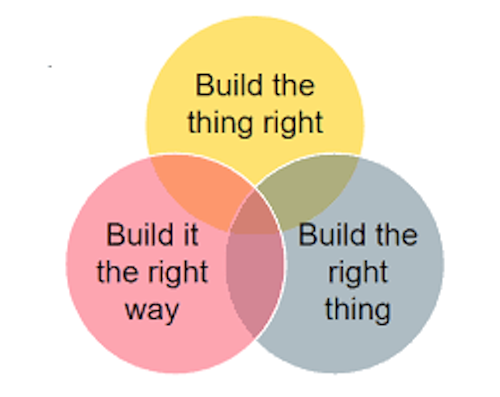
The problem is that movement by itself does not necessarily mean progress, even though people often confuse the two. Some of the most disorganized products out there are actually built by incredibly fast teams. To prevent this structural decay, modern engineering teams must anchor their daily execution in smarter product development principles before committing expensive technical resources to unvalidated roadmaps.
Why do fast teams fall into a permanent execution trap?
Inside velocity-driven organizations, software developers and product managers frequently become trapped in permanent execution mode. Everybody is busy every hour of the day, meetings fill entire calendars, deadlines keep stacking on top of each other, and yet there is a quiet feeling underneath that people are running without fully understanding where they are supposed to be going.
Developers are shipping things quickly, but many of those updates later get ignored, rebuilt, or quietly abandoned. An estimated 80% of unvalidated features suffer from low user adoption because the product starts feeling patched together over time, almost like nobody ever paused long enough to ask what truly mattered.
When shipping velocity becomes the sole metric of success, systemic product fragmentation degrades the user experience.
What is the psychology behind skipping foundational validation?
Skipping critical exploration happens because building concrete software feels productive in a highly visible way. Shipping features creates immense excitement internally, yielding an immediate sense of accomplishment attached to seeing tickets closed, progress bars move forward, and updates announced publicly. Discovery work rarely produces that same immediate emotional reward. Spending two weeks interviewing users or testing rough prototypes does not generate the same internal energy as launching a polished new feature.
- Tickets closed on a digital scrum board look like tangible operational progress.
- User interviews highlight hard flaws that internal teams often prefer to ignore.
- Public announcements satisfy stakeholder demands for immediate visible results.
How does avoiding discovery create severe long-term financial costs?
Avoiding the early, uncomfortable questions usually just postpones systemic product problems instead of preventing them. A company may save a few weeks by jumping directly into core development, but then lose six months later trying to fix low adoption, confusing user behavior, or features nobody really wanted. Teams can execute beautifully from a technical perspective while still solving the wrong problem entirely. Wasted capital and engineering hours come from intelligent people working very hard on assumptions that were never tested properly. Once time has been invested, organizations become emotionally attached to the idea.
Admitting a concept is flawed becomes significantly harder when months of engineering effort are already locked in.
Where is the boundary between healthy discovery and endless analysis?
Good validation is fundamentally about creating enough contact with reality before corporate momentum takes over completely. That does not mean endless research or permanent hesitation either. Some companies fall into the opposite trap, where discovery becomes an excuse to delay decisions forever through endless workshops, endless brainstorming sessions, and endless strategic conversations that never lead anywhere concrete. At some point, product teams still need to commit, build, test, and release. Reducing avoidable operational risk is the real objective, not achieving perfect certainty.
How did agile methodologies originally connect to shortening learning cycles?
What many modern product managers forget is that agile methodologies originally emerged from this exact philosophy of risk reduction. The point was never simply to move faster for the sake of speed. The deeper idea behind agility was shortening learning cycles so teams could release smaller experiments, gather feedback earlier, and adapt before making enormous long-term bets. Over time, however, many organizations kept the empty rituals of agility while completely losing the flexible mindset underneath them. This explains why velocity without direction yields disconnected applications.